
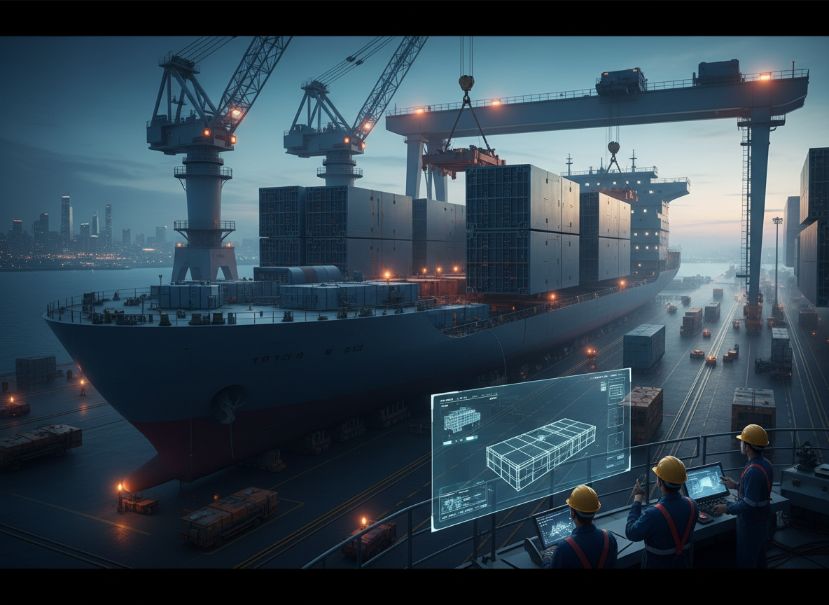
Advanced and Sustainable Manufacturing Technologies for Shipbuilding and Repair
- Home
- IP Marketplace
- Advance Material & Coating
- Advanced and Sustainable Manufacturing Technologies for Shipbuilding and Repair
Technology Overview
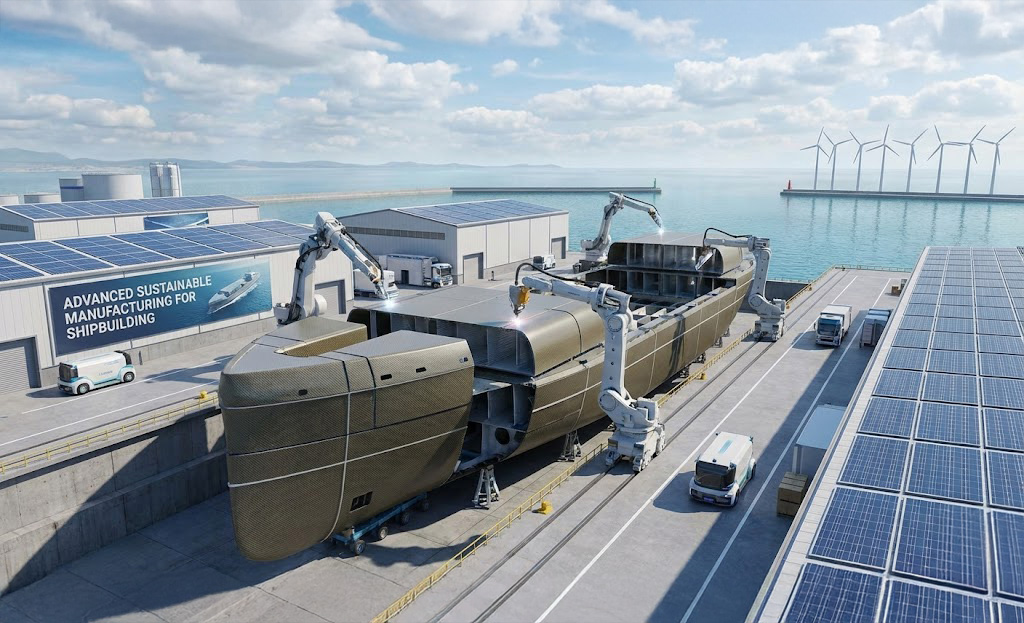
Modern shipbuilding using advanced materials, automation, and modular construction for efficient, sustainable vessel creation and repair.
CATEGORY
TECHNOLOGY READINESS LEVEL (TRL)
Advanced & Sustainable Shipbuilding Technology
-
Modular Construction:
Significantly reduces construction time with prefabricated sections assembled on-site. Lowers labour, production costs, Improves build consistency and quality control
-
Improved fuel efficiency and operational performance:
With the use of aluminium and advanced composites, it reduces vessel weight and enhance corrosion resistance for longer lifespan
-
Eco-friendly coatings and surface treatments:
Robot Incremental Sheet Forming, Hybrid Direct Energy Deposition (DED) and Laser Blasting can be explored to further minimise environmental impacts while maintaining vessel performance.
-
Future-Ready Shipyard Ecosystem:
Integrates advanced manufacturing with sustainability goals, enables scalable, high-efficiency production systems
-
Strategic Industry Impact:
Reduces total vessel lifecycle cost, improves competitiveness of shipyards and strengthens resilience of maritime supply chains
Maritime Use Cases

These technologies support more efficient shipbuilding and repair by enabling modular vessel construction, where prefabricated sections can be assembled more quickly to reduce build time and costs. Automation and robotics, such as robotic welding and hull cleaning, can also improve precision, productivity, and worker safety in shipyard operations.
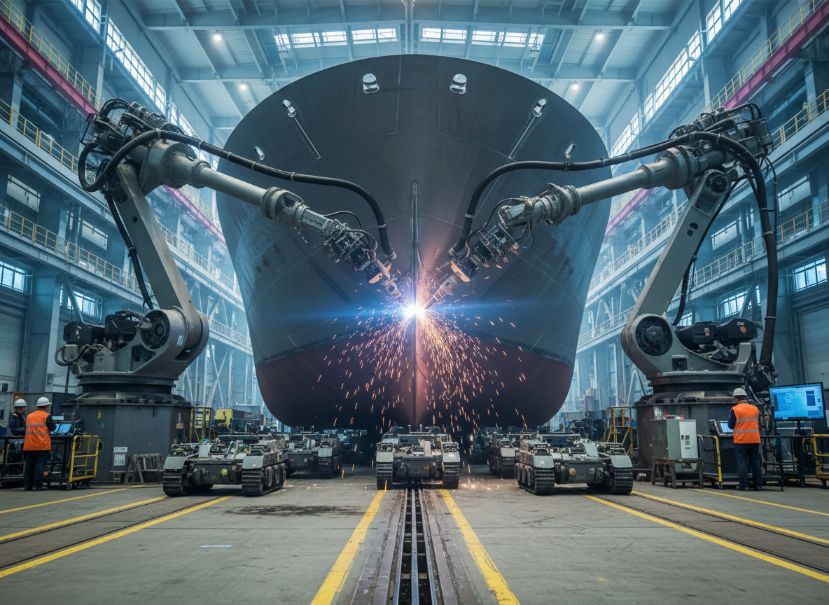
The use of advanced materials such as aluminium and composite structures can enhance vessel performance by reducing weight and improving corrosion resistance, leading to better fuel efficiency and lower maintenance requirements. Eco-friendly coatings can further reduce biofouling, improve hydrodynamics, and minimise environmental impact during vessel operations.
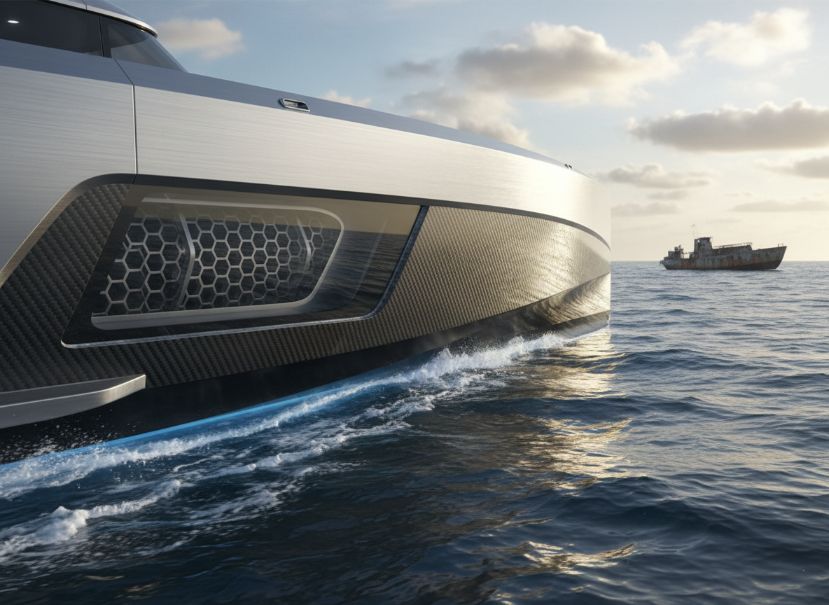
In addition, sustainable manufacturing techniques such as laser blasting and hybrid directed energy deposition (DED) additive manufacturing enable cleaner surface treatment and on-demand production or repair of metal components with reduced material waste. Advanced fabrication methods, including honeycomb panel structures and robotic incremental sheet forming, also allow the efficient production of lightweight and complex ship components, supporting improved vessel efficiency and modern shipyard capabilities.
Related Tech Offers
related products
-
Visual Connectivity Preserving Devices and Methods for Cooperative Ground Robots in Unknown Obstacle Environments
by pixart$0.00 Add to Cart -
Subsea Vigilance with Underwater Sensing
by pixart$0.00 Add to Cart -
A Rainwater Based Aqueous Stationary Rechargeable Energy Storage System
by pixart$0.00 Add to Cart -
TT-Logic.AI: Building Explainable, Verifiable, Compact and Secure AI Solutions for Critical Applications at Scale
by pixart$0.00 Add to Cart